
How In-Building Fitness Programs Are Changing the Value Proposition for NYC Luxury Residential Developers
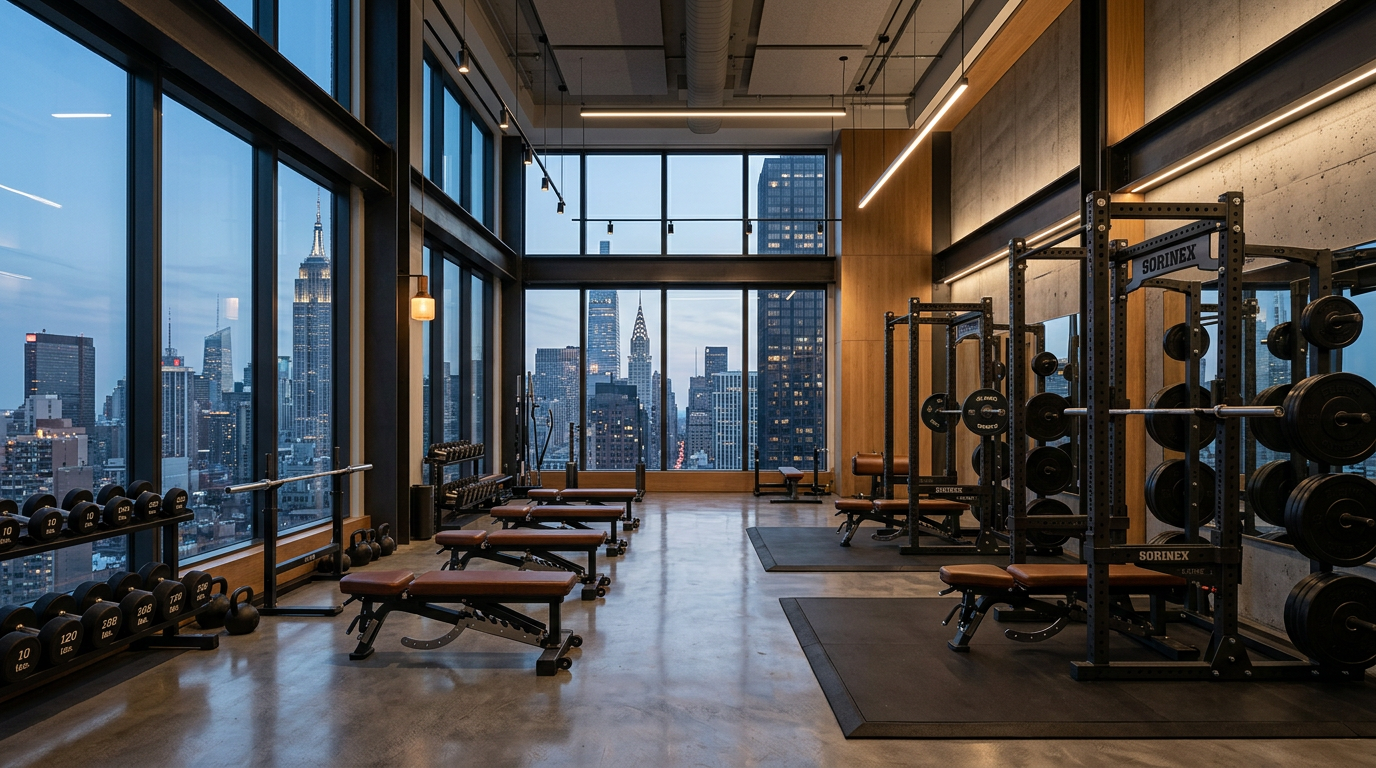
A luxury gym facility inside of a luxury building in New York City
Today, in-building fitness programs in NYC have become one of the most consequential differentiators in the luxury residential market. Not because residents demand more equipment, but because they demand more results. The shift is from amenity as asset to amenity as experience, and the developers who understand that distinction are pulling ahead.
Design is the foundation. It has to be right.
A performance-based fitness facility doesn’t happen by accident. The layout, the equipment selection, the flow, the lighting, the flooring – every decision either supports or undermines the way people train. Fitness amenities for luxury apartment buildings require the same precision applied to every other part of a high-end development. Get the design wrong and no amount of programming can fully compensate. Get it right and you’ve built something residents will actually use: a space that feels intentional, functional, and worth returning to.
This is where the value creation begins. A well-designed, performance-oriented facility signals to prospective residents that the building takes wellness seriously. It earns credibility on the tour, holds up under daily use, and creates the conditions for everything that follows. But it’s the starting point, not the finish line.
Programming and management are where the investment compounds.
There’s a practical limit to how much hardware alone can drive perceived value. At a certain point, adding another piece of equipment stops moving the needle. What continues to move the needle – exponentially – is what happens inside the space after the ribbon is cut.
Building wellness programs in New York City that are genuinely used require intentional programming architecture: the right staffing model, structured offerings, and a resident onboarding process that converts someone who walks past the gym into someone who shows up three times a week. Luxury residential wellness amenities only deliver on their promise when the operational layer is built to match the design layer. One without the other is an incomplete investment.
What residents are actually paying for.
Luxury residential buyers and renters in New York City are not purchasing access to a treadmill. They’re purchasing a version of their life that includes health as a built-in feature. Something they don’t have to carve time and money out of their day to chase separately. When a building can deliver that, when the trainer knows your name, when the program evolves with your goals, when recovery and nutrition are part of the same ecosystem, the building becomes harder to leave. Retention improves. Referrals increase. The amenity stops being a cost center and starts functioning as a loyalty engine.
That’s the full value proposition. But it requires design, programming, and management working as a single integrated system.
Where most developments leave value on the table.
The gap we see most often isn’t in capital investment. Developers building at this level typically understand the stakes. The gap is in the operational strategy that follows. A thoughtfully designed space without the programming infrastructure to activate it is an underperforming asset. What separates properties with genuine resident engagement from those with expensive, underused amenities is almost always a question of who is running the program and whether that expertise is sustained over time.
This is precisely where residential property wellness consulting changes the outcome. At The Wright Fit, our work with developers spans the full continuum – from facility design and equipment strategy to programming architecture, operator sourcing, and long-term management. We build the systems that keep the amenity performing at a high level not just at opening, but through the life of the building.
The bottom line for developers.
The buildings winning on wellness in New York City right now are the ones where design excellence and operational excellence are treated as equally important. When both are in place, the fitness and wellness amenity stops being a line item and becomes a measurable competitive advantage; one that drives leasing velocity, supports premium pricing, and keeps residents engaged for the long term.
If you're planning a development or looking to elevate an existing property, the conversation worth having spans the full picture: the design of a functional, performance-based environment and the programming and management infrastructure that makes it work every day after you open the doors. Learn more about what The Wright Fit does for developers at thewrightfit.com.